By ten past ten there is already a queue. A woman with a standing lamp under her arm. A teenager holding a games controller like a wounded bird. A man in a good coat carrying a coffee grinder in a supermarket bag, looking slightly embarrassed to be here at all.
The repair café meets on the second Saturday of every month in a community hall that smells of floor polish and filter coffee. There are six tables, each with a volunteer, a toolbox and a small handwritten sign: electrics, textiles, bikes, small appliances, computers, and one simply marked anything.
Intake
Every object is logged at the door. A volunteer named Sanne writes down what it is, what is wrong with it and how old it is, and gives its owner a number. She has done this for six years. She can tell, she says, from the way people hold their things whether they expect them to be saved.
The rule is that you stay with your object. Nobody drops things off. The volunteers do not fix things for you; they fix things with you. It is slower that way, and the point is that it is slower. By the time the grinder is working again, its owner knows where the burrs sit and why the motor was jamming, and he will probably never need to come back for the same fault.
The toaster
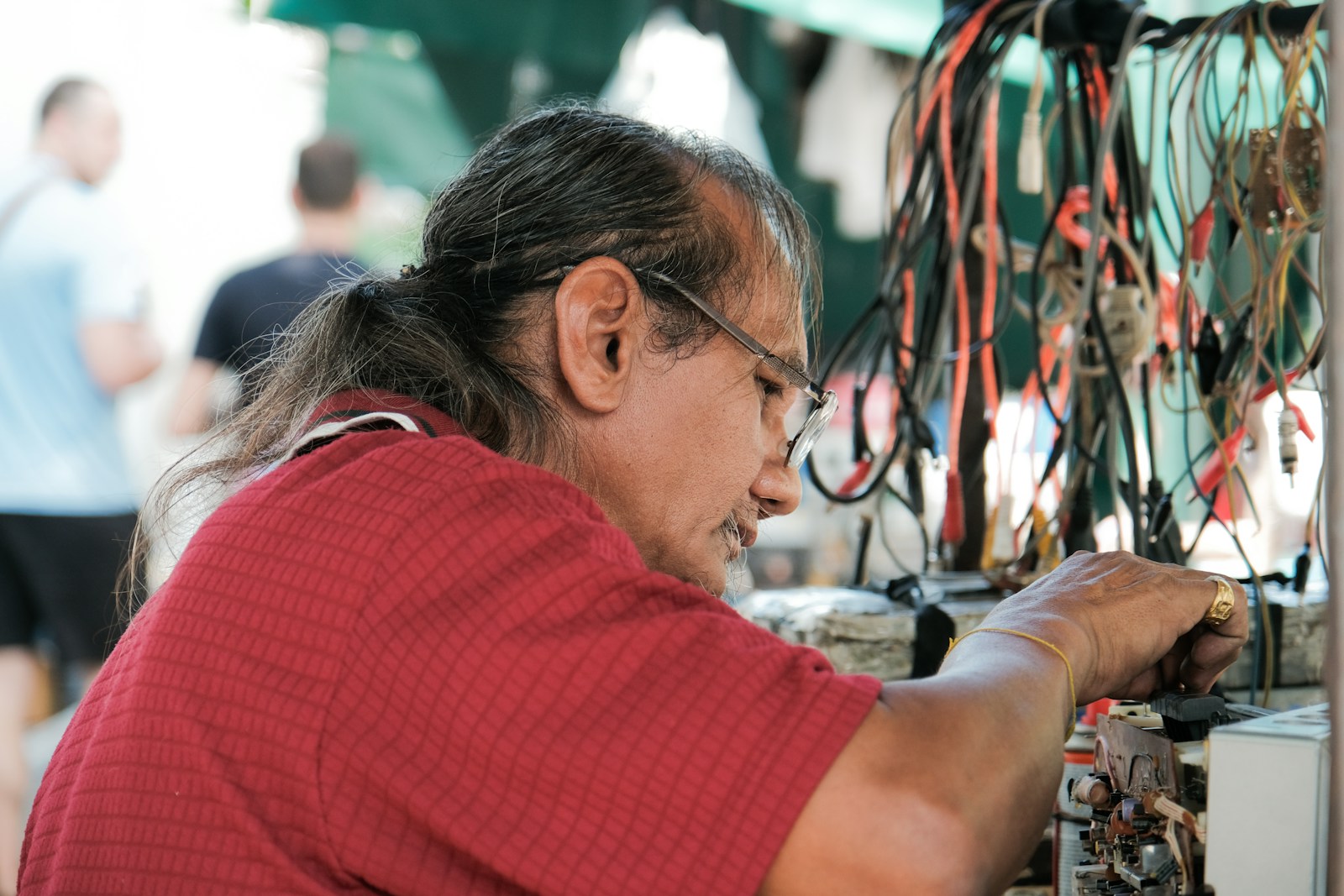
At the small appliances table sits Wim, who spent forty years as an engineer at a company that made industrial scales. He is working on a chrome toaster from 1978, brought in by a woman whose mother received it as a wedding present. The element is fine. The problem is a small spring in the pop-up mechanism that has lost its temper.
Nobody makes that spring anymore. Wim does not seem to regard this as a problem. He finds a length of spring steel in his toolbox, winds a replacement around a screwdriver shaft, trims it with side cutters and fits it with the patience of someone threading a needle. The first test fails. So does the second. On the third, the bread rises with a small, satisfied clack, and the woman laughs out loud.
If it was built by a person, Wim says, it can be understood by a person. He says this like a principle rather than a boast.
What does not come back
Not everything is saved. A laptop is declared beyond help after a careful hour; the logic board has failed and the part costs more than the machine is worth. A cheap kettle has a sealed base that cannot be opened without destroying it. The volunteers log these too, with the reason, because the reasons are data. Over the years they have become a quiet record of which products were designed to be looked after and which were not.
By two o’clock the hall is emptying. Thirty-one objects came through the door. Nineteen went home working. The coffee grinder, the lamp, the controller and the toaster are among them. Sanne tidies her logbook, Wim packs his spring steel, and somebody sweeps up a small drift of wire offcuts and dust.
Next month, the queue will start at ten past ten again.
“If it was built by a person, it can be understood by a person.”


